Designing Light as an Integrated, Data-Driven Architectural Layer
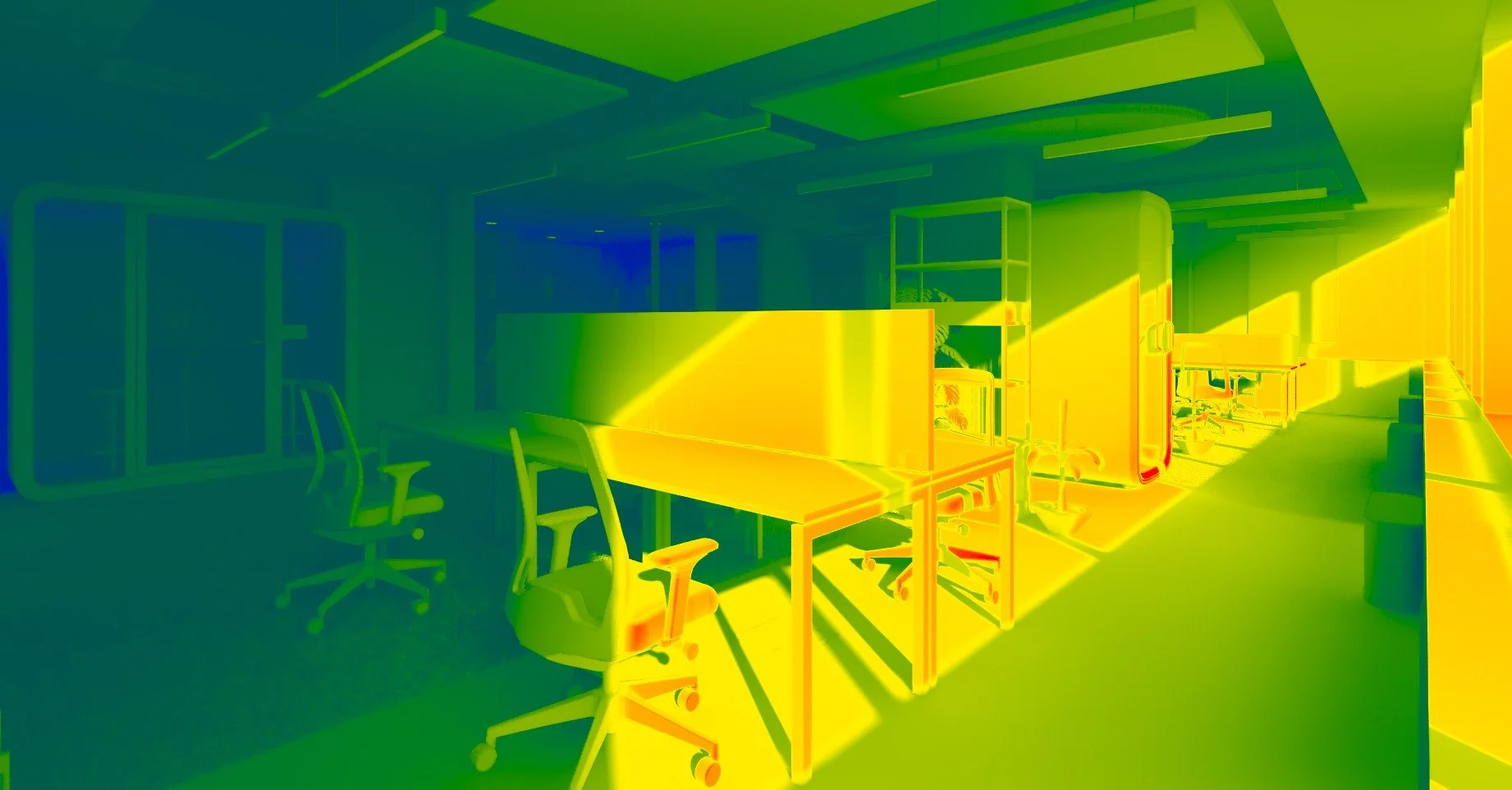
In contemporary architecture, lighting has moved far beyond its traditional role of illumination. It has become a strategic architectural system—one that directly influences spatial perception, user comfort, operational efficiency, and sustainability performance.
At ICH, lighting is treated not as a standalone discipline, but as a performance-driven design domain, fully integrated with architecture, engineering, and digital workflows from the earliest project stages.
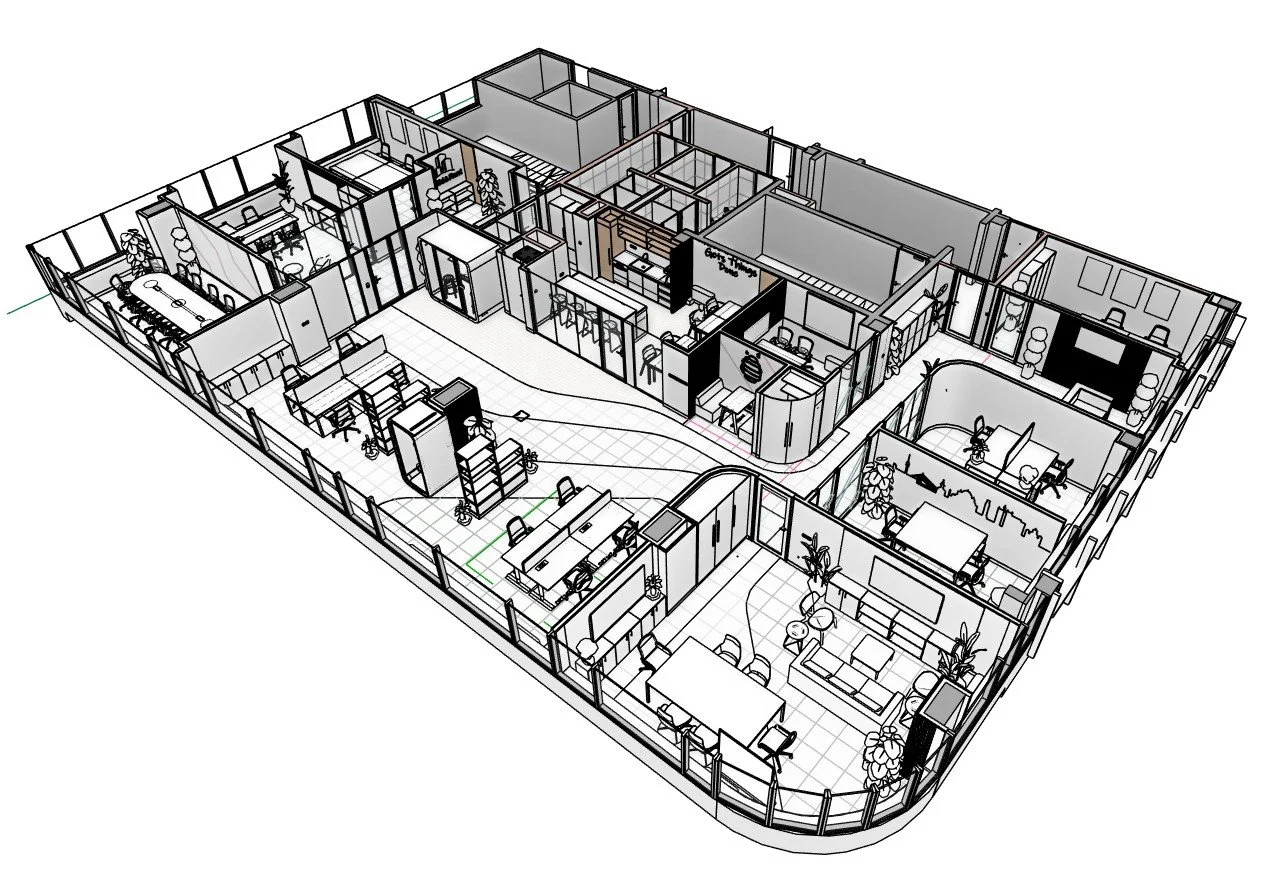
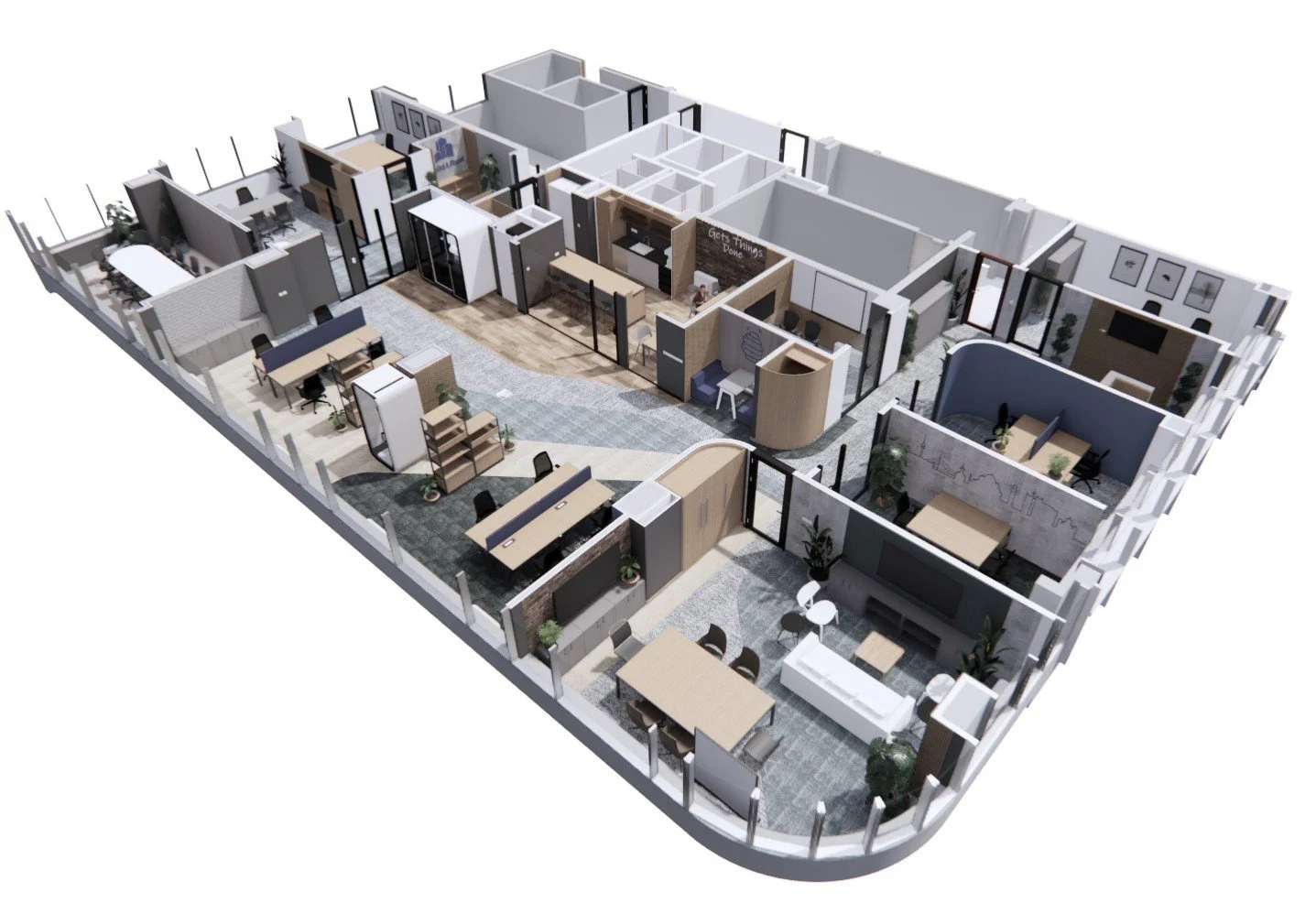
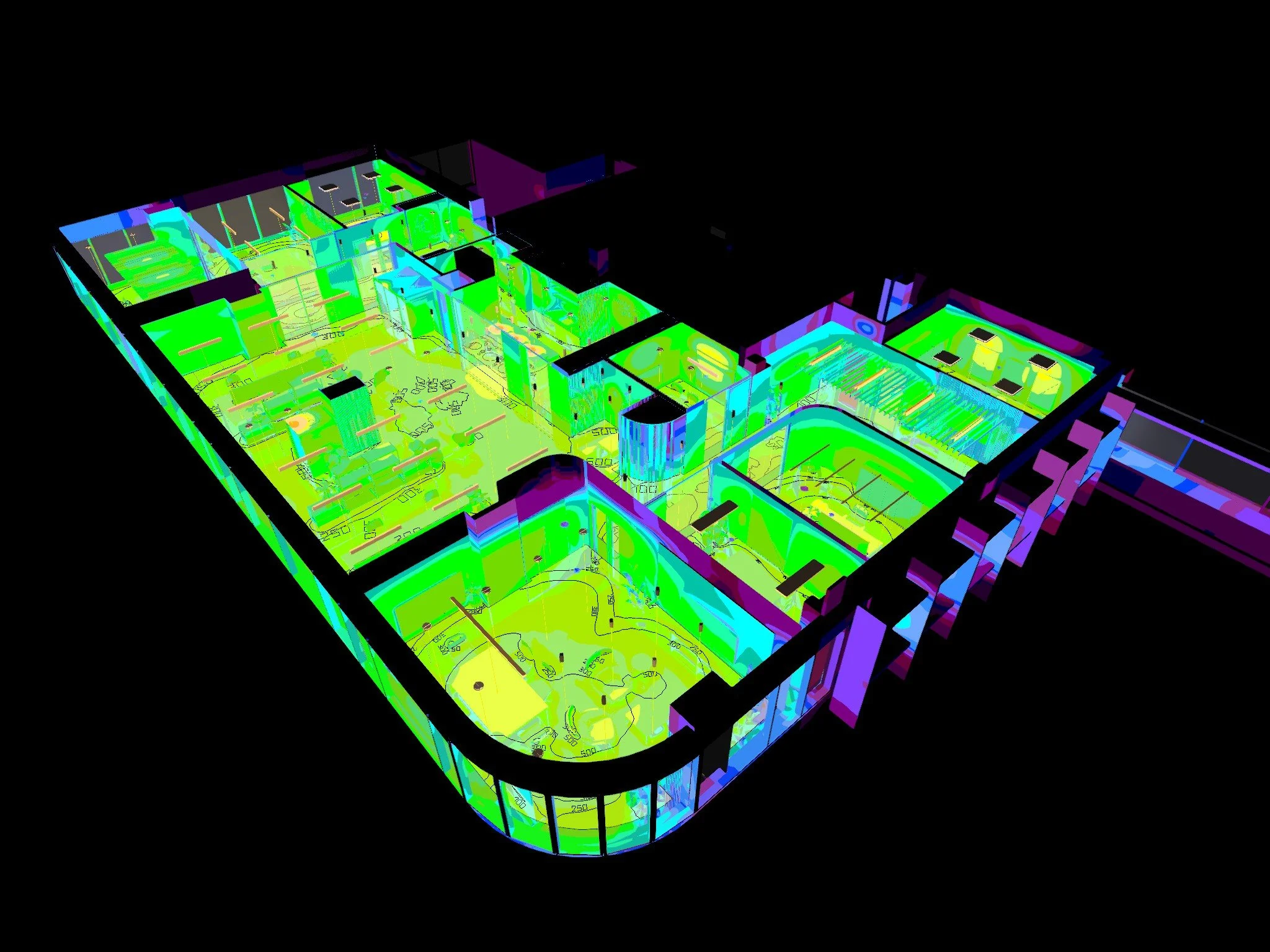
Architectural lighting is often discussed in visual terms—mood, atmosphere, accent, identity. While these aspects remain essential, they are no longer sufficient on their own. Today’s projects demand verifiable performance, clear alignment with energy targets, and compatibility with certification frameworks such as LEED.
Our approach bridges this gap by translating architectural intent into quantifiable lighting performance. Design decisions are not based on intuition alone, but are continuously tested against real spatial data, usage scenarios, and regulatory requirements. In this way, lighting becomes both expressive and accountable.
An Integrated Design Mindset
Within the ICH Lighting Performance Domain, lighting design is developed in parallel with architecture, interiors, façade systems, and MEP. This integrated mindset allows lighting to actively shape space rather than adapt to it after the fact.
By embedding lighting early in the design process, we are able to:
Support architectural concepts with coherent light hierarchies
Coordinate luminaires with ceilings, structures, and façades
Anticipate technical constraints before they become conflicts
Reduce redesign cycles and late-stage compromises
The result is a lighting strategy that feels natural, intentional, and technically robust.
BIM-Based Workflow as the Backbone
Digital coordination is not an add-on—it is the backbone of our workflow.
Lighting design is developed directly within BIM environments, primarily using Revit as the central coordination platform.
From the BIM model, lighting data is systematically transferred into analytical environments:
Geometry and layout via DWG exports / IFC (from REVIT)
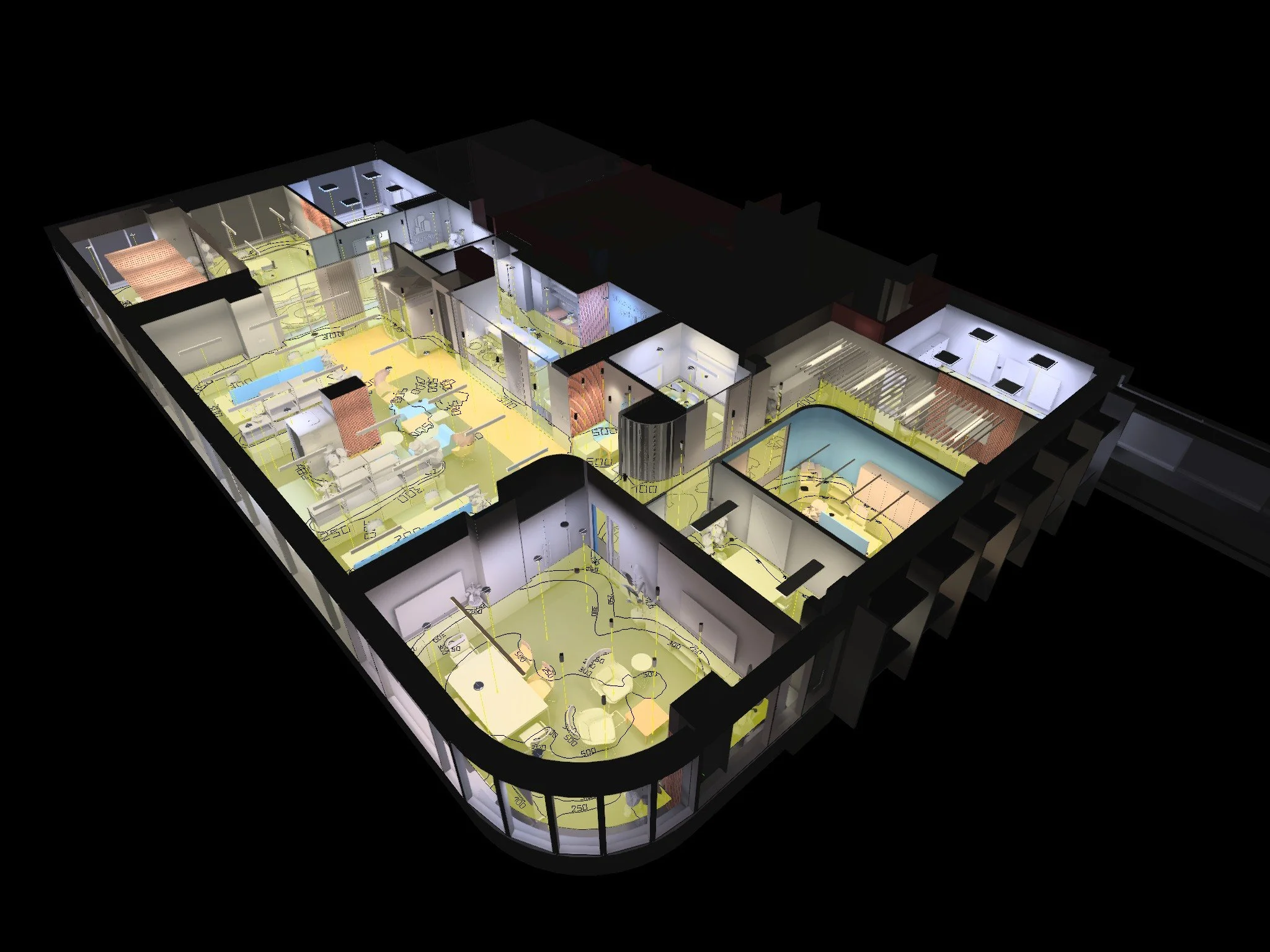
Photometric simulations and compliance checks using DIALux
This structured workflow ensures full consistency between architectural drawings, coordination models, and lighting calculations. Every analysis can be traced back to a spatial and geometric reference within the model, reinforcing transparency and reliability throughout the design process.
Performance-Based Lighting Analysis
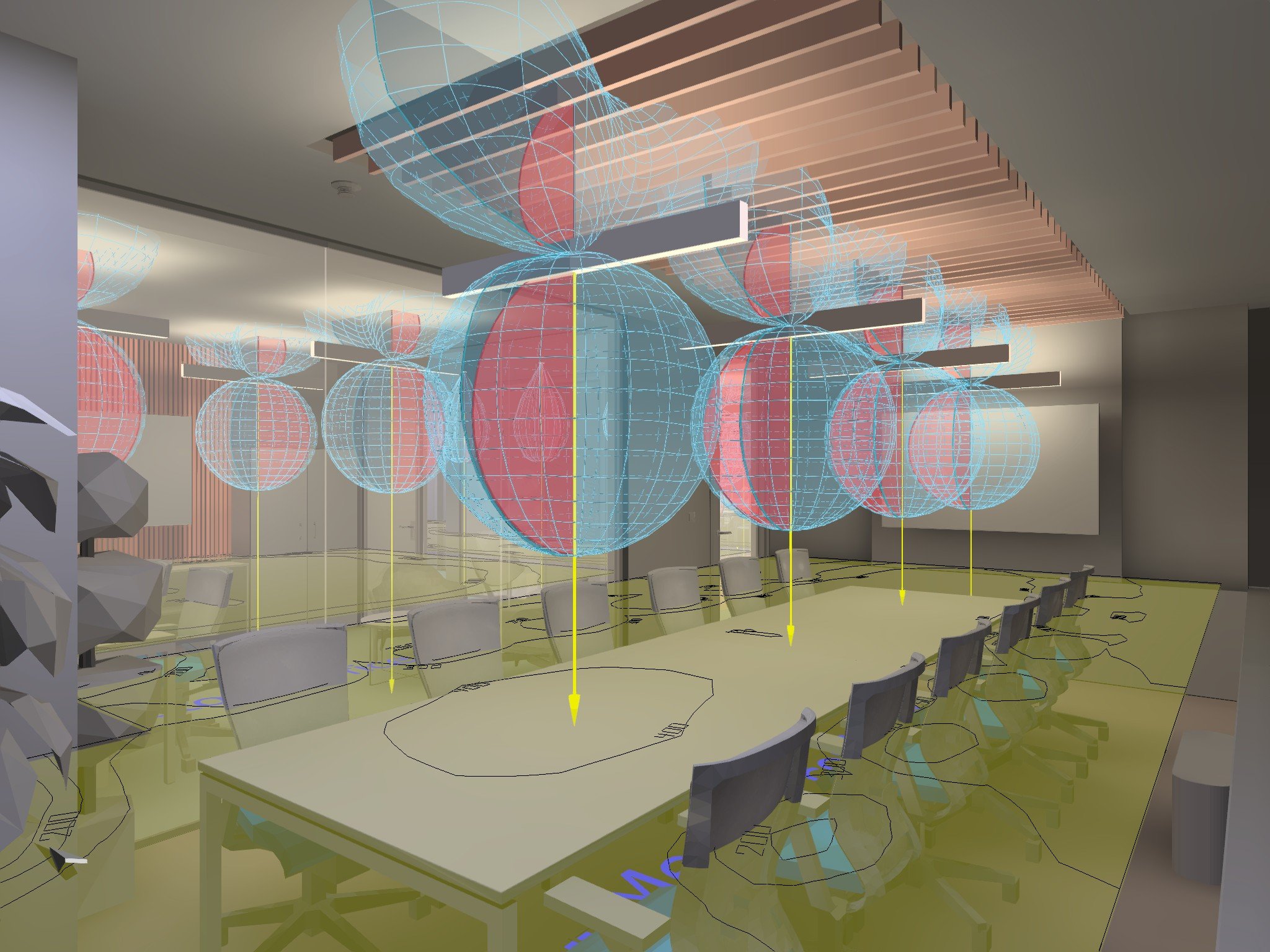
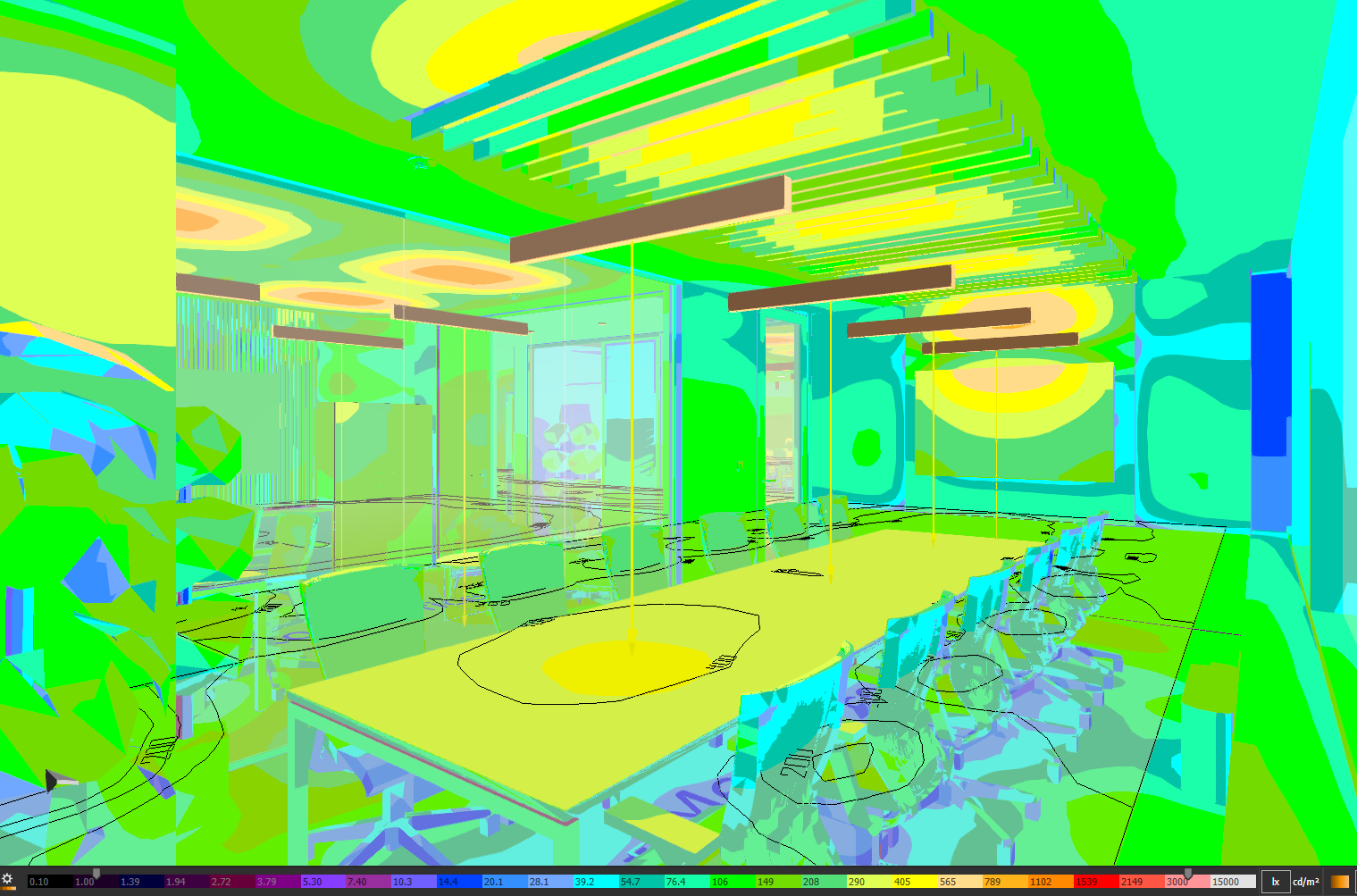
Lighting quality cannot be evaluated visually alone. Through detailed DIALux simulations, we assess key performance parameters such as illuminance levels, uniformity, glare control, and contrast ratios across different spatial scenarios.
These analyses allow us to test design alternatives, validate compliance with standards, and optimize solutions before construction begins. Rather than over-lighting spaces “to be safe,” we aim for precision and efficiency, balancing comfort, clarity, and energy use.
Performance-based design transforms lighting from a subjective choice into a controlled and optimized system.
User-Centric and Experience-Oriented Design
While metrics are critical, lighting ultimately serves people.
User comfort, orientation, and perception remain at the core of our design philosophy.
We design lighting environments that respond to:
Human scale and visual adaptation
Functional requirements of different user groups
Temporal changes throughout the day
Emotional and experiential qualities of space
Whether the project involves offices, public interiors, cultural buildings, or mixed-use environments, lighting is used as a tool to guide movement, emphasize spatial structure, and enhance the overall user experience—without visual fatigue or unnecessary complexity.
Sustainability and Certification Alignment
Lighting plays a significant role in sustainability strategies and building certifications. Our Lighting Performance Domain actively supports energy efficiency goals, daylight integration, and smart control strategies aligned with LEED and similar frameworks.
By coordinating lighting design with façade performance, daylight access, and control systems, we help projects reduce operational energy demand while maintaining high comfort standards. Importantly, the design and analysis outputs are structured to support certification documentation without additional rework.
Sustainability is not treated as a checklist, but as a design logic embedded into lighting decisions from day one.
Communicating Light: From Data to Narrative
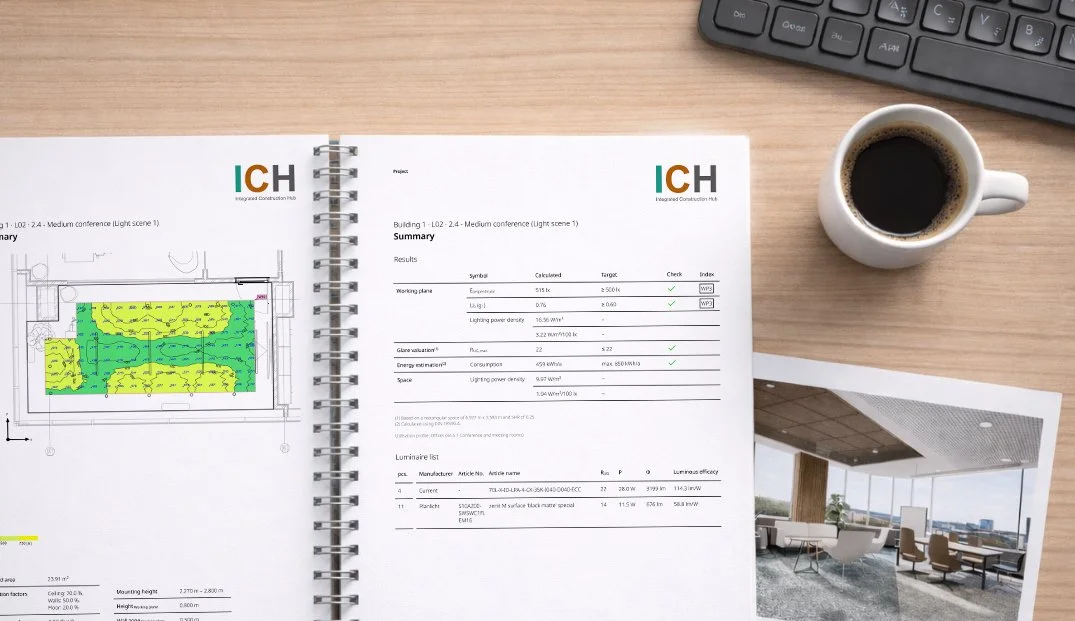
A key aspect of our work is translating technical complexity into clear visual and narrative outputs. Using Revit views, DIALux diagrams, and Enscape visualizations, we communicate both performance data and spatial atmosphere in a way that is accessible to clients and stakeholders.
This dual-layer communication ensures that lighting design is understood not only by engineers, but also by developers, architects, and end users—strengthening decision-making and alignment across the project team.
Lighting as a Strategic Design Asset
Through the ICH Lighting Performance Domain, lighting becomes a strategic asset rather than a secondary system. It contributes simultaneously to architectural identity, user well-being, energy performance, and long-term value.
By combining integrated design thinking, BIM-driven workflows, and performance-based analysis, we position lighting at the intersection of architecture, technology, and human experience—exactly where it belongs.